Ecological Gardening: How To Welcome Wildlife And Wild Plants Into Your Garden.
A garden is not a natural space, but it can become a remarkably effective refuge for birds, hedgehogs, earthworms, and wild plants. Here, step by step, is how to transform your land into an ally of biodiversity... and make your life as a gardener easier.
The garden, an ecosystem serving biodiversity.
Let's be honest from the start: a garden is not a natural space. It domesticates certain elements of life, adapting them to our habits, our desires for mowed lawns and flower beds. But it does not oppose nature; on the contrary.
In urbanized areas and housing developments, gardens form true refuges for wildlife. They can even serve as a conservatory for threatened plants. And when several neighboring gardens touch, they create what is called an ecological corridor, meaning a link between the habitats of different species.
For this corridor to function, all it takes is a simple gesture: leaving free spaces at the base of fences so that animals can move from one property to another. This is how suburban gardens play a role as a green framework in relation to the city: plants and animals can move, meet, and multiply.
In other words, your plot, even modest, is a link. Wild species and their habitats play a crucial role in the ecological and biological processes essential to life, and the overall balance depends on the countless interactions between plants, animals, and microorganisms.
Why welcome wildlife into your garden
The presence of animals is not a decorative luxury: it is essential for the ecological balance of the garden. Without it, much of the work would fall on your shoulders... and on your sprayer.
Wild animals play a role in several biological processes whose extent we do not always measure: the pollination of flowers, the dispersion of seeds, germination, soil regeneration, the decomposition of organic waste, and, of course, the fight against crop pests.
This is where the concept of auxiliaries comes into play. An auxiliary is a natural predator of a pest: the ladybug, which regulates aphid populations, is the most well-known example. But there are many others, often very specialized, to the point that professionals have made it a discipline in its own right, integrated biological control (IBC).
The reasoning of the ecological gardener is therefore simple: rather than treating, they create conditions that attract and retain these allies. A balance eventually establishes itself, and pest attacks become rare and manageable.
Indigenous hedges, an essential refuge for animals.
If you can only do one thing for the wildlife in your garden, plant a mixed hedge. The large green curtain made up of a single species, like a line of thuja, is an outdated concept: aesthetically questionable and, above all, ecologically absurd, as monoculture weakens plants. This is evident with thuja, which turn brown after attacks from the buprestid beetle, against which there is almost nothing that can be done.
Inspired by the traditional hedgerows of the past, the mixed hedge combines various hardy shrubs that are well-suited to the local climate. Aim for a proportion of 30 to 50% evergreens to maintain opacity in winter, with the rest being deciduous, which offer more intense blooms and a hedge that changes appearance throughout the seasons.
In practice: for an ecological hedge, three or four species are sufficient over a length of 10 meters. If you also aim for ornamental value, increase to six species whose appeal varies from month to month. Arrange the plants randomly for a natural effect, spacing them 80 cm to 1.5 m apart depending on their adult size, which saves costs while allowing each plant to thrive.
Be sure to include species with decorative berries that feed birds: serviceberry, firethorn, honeysuckle, dogwood, barberry, leycesteria, blackthorn, rowan, elder, viburnum... A dense hedge 1.5 m high and 1 m wide, with thorny shrubs (wild rose, holly, mahonia, sea buckthorn, rough rose, Japanese quince) planted in a staggered pattern across two rows, becomes nearly impenetrable for a human while providing a valuable refuge for birds and hedgehogs. Maintenance? It consists of balancing the branches and removing dead twigs.
Companionship, a natural technique for crop protection.
Companion planting is one of the simplest techniques to limit the impact of pests and crop diseases, and it costs nothing. The principle: to associate so-called friendly plants in the same space, which play a beneficial role for each other.
The benefits can take several forms. Some plants have repellent properties against certain pests, while others act by confusion: their mixed scents simply cause disorientation among biological aggressors, who can no longer find the plant they are trying to colonize. A row of vegetables isolated in the middle of a bare patch is an easy target, while a row submerged in a fragrant mix is much less so.
This logic is accompanied by a second equally effective reflex: choosing plants suited to the climate of your region and the specifics of your soil right from the purchase. An olive tree, a citrus tree, a mimosa, or a oleander will only thrive in the mild climates of the coast, while camellias, rhododendrons, astilbes, and hydrangeas prefer cool, shaded spots in acidic soil, and rosemary, thyme, lavender, or cistus require dry soil and full sun.
A plant placed in conditions that suit it rarely gets sick. This is the best preventive treatment, and it is free.
Birds, valuable allies against pests.
Insectivorous birds are probably the most effective of your volunteer employees. A single insectivorous bird can devour up to 8,000 caterpillars in one season. Do the math with three or four breeding pairs in your hedge...
Among the major consumers of insects are the dunnock, goldfinch, warbler, grey flycatcher, song thrush, swallow, swift, blackbird, blue tit, great tit, woodpeckers, nightingale, robin, nuthatch, and wren. Their presence mainly depends on the botanical diversity of the garden and the presence of trees, shrubs, and grasses that provide them with shelter and food.
To prevent birds from attacking the buds of your fruit trees during cold periods, plant berry bushes that will feed them: snowball bush, service tree, male dogwood, European spindle, blackthorn, rowan, black elder, common privet, and viburnum lantana. You can supplement this with feeders offering seeds of various sizes, and with fat balls or lard during very cold days.
One non-negotiable condition: in a garden where you want to see birds thrive, you must avoid any pesticide treatments, especially insecticides, but also herbicides. Finally, be aware that all small passerines the size of a blackbird and smaller are protected in France, as are raptors (owls, hawks, buzzards, sparrowhawks), which are among the most effective predators against rodents.
Hedgehogs, toads, and lizards: discreet but effective allies.
The hedgehog is considered one of the main friends of the gardener, and it is completely protected throughout French territory: a decree from April 17, 1981, prohibits hunting, capturing, transporting, commercializing, naturalizing, and even keeping it at home. An insectivorous mammal with an omnivorous diet, it hunts at night and preys on about a hundred different invertebrates: insect larvae, slugs, caterpillars, snails, spiders...
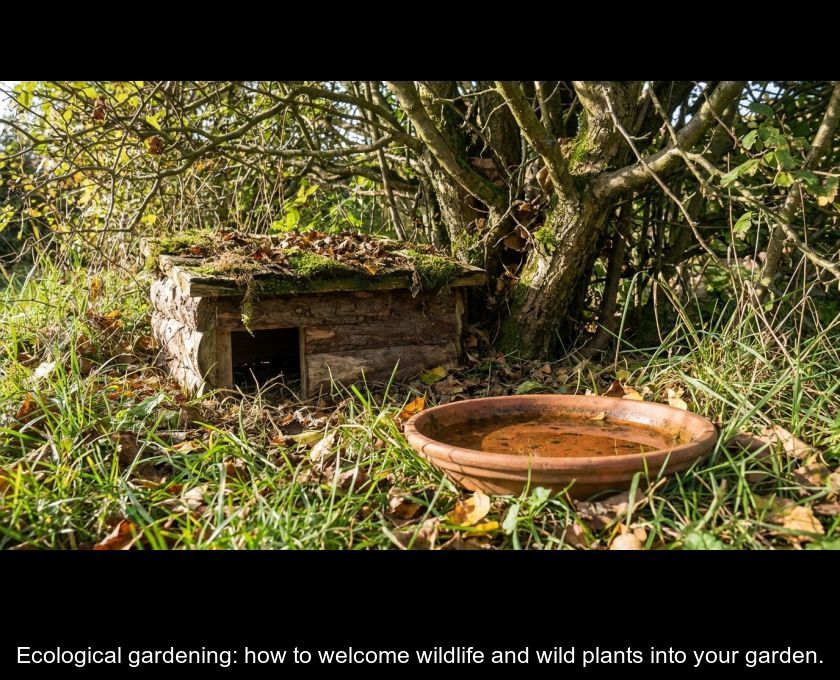
To welcome it practically: avoid enclosing your property with a wall; it should be able to move from one garden to another (a hedge does not hinder it, nor does an unburied fence). Provide cover with clusters of shrubs, well-branched hedges from the base, piles of compost, dead leaves, straw, or hay. A box filled with dry grass placed under a bush will allow it to nest, and commercially available shelters made of wood or woven wicker should be installed in the shade, as it is sensitive to heat. A bowl of cat or dog kibble irresistibly attracts it, especially those with chicken, but definitely no milk, even though it loves it.
As soon as the temperature drops below 10 °C, the hedgehog enters lethargy, a critical period during which it can lose 30% of its weight. The first step to protect it: ban slug pellets containing metaldehyde and replace them with products based on ferric phosphate, which are safe for warm-blooded animals.
Two other discreet creatures deserve attention. The shrew, recognizable by its long pointed nose, is not a rodent but an insectivore that nests in dense hedges, remains active all year round, and consumes the equivalent of its weight in insects, slugs, and worms each day: leave layers of dead leaves under the hedges and maintain permanent mulch on crops. Bats, on the other hand, are among the most voracious insect consumers, they are completely protected in France, and to attract them, simply leave hollow trees in place and preserve lean-tos and outbuildings, where they willingly nest in the rafters.
Finally, a water point changes everything. The pond becomes the gathering place for hedgehogs, frogs, toads, tree frogs, newts, and salamanders, which come to hunt insects lurking there. A gently sloping bank with a small pebble beach facilitates access for animals, allowing them to drink, bathe, or rest safely.
The role of wild animals in the biological processes of the garden.
The most important worker in your garden, you almost never see: it's the earthworm, or worm. Active all year round, it burrows into the soil more or less deeply depending on the ambient temperature and naturally aerates it, without any tools.
Its diet explains everything else. It consumes dead root hairs that it cleans directly from the plants, and especially organic waste that it mixes with soil: the result is a natural loosening and enrichment of the soil. It also ingests microscopic fungi present in the soil, which limits the development of many root diseases.
Its droppings, called turricules, these small coils expelled to the surface often in winter, are an excellent natural fertilizer: they are rich in humus, calcium, nitrogen, phosphorus, and potassium. In a 1,000 m2 garden, it is estimated that between 4 and 12 tons of turricules are excreted each year, and that the entire volume of fertile soil passes through the digestive tract of earthworms in about fifty years.
Nota Bene: the number of earthworms directly depends on the richness of the soil in organic matter. In well-amended soil, there are more than 1,000 per square meter. Hence the importance of regular applications of manure and compost, which nourish the humus and thus all underground life.
Integrate the garden into its local natural environment.
The word garden comes from the Latin "gardinus," which refers to an enclosed space, and the dictionary states nothing else: a generally enclosed area where useful or ornamental plants are cultivated. The idea of protection from the outside is therefore embedded in the word itself. In urban areas, this enclosure often remains essential for simple security reasons.
But outside urban zones, why not forget this connotation of a closed garden and open up to the surrounding landscape by integrating your plantings? The garden then becomes a source of protection for biodiversity, within a framework that truly takes into account the wild flora and fauna.
Aesthetically, this open garden works when the surrounding landscape is appealing enough to want to incorporate it into one’s personal decor. In this case, favor native plants or unsophisticated species: no colorful or variegated foliage, no oversized or double flowers that would immediately betray the artifice. The lines of the flowerbeds will follow the undulations of the surroundings, and the perimeter of the property will be well cleared.
Another concrete gesture, applicable everywhere: keep a small wild corner in the garden by allowing spontaneous plants to grow freely. Before mowing a wild meadow, take the time to check that it does not harbor some botanical treasures belonging to protected flora.
Choose regional plants to promote biodiversity.
Using regional plants, or those that resemble them, is the surest way to blend the garden into its territory. Coniferous clusters are prominent in heathlands or the Vosges, while groups of grasses are justified in cereal regions: the logic is to compose with the landscape rather than turn one's back on it.
However, one must know what one is talking about, as the vocabulary of the wild is full of nuances. A wild plant is a plant that grows spontaneously in an area, without having been planted or sown by humans. An indigenous plant, or spontaneous plant, grows naturally since its origin in a given region. An endemic plant only grows in a specific location, within a defined distribution area, and nowhere else.
An introduced plant did not originally exist in the environment; it was brought there by humans: if it acclimatizes and multiplies spontaneously for at least ten years, it is said to be naturalized, and it then behaves like an indigenous plant. However, caution is needed with invasive species, those introduced plants that spread to the point of threatening local vegetation: tree of heaven, butterfly bush, Himalayan balsam, witch's claw, ragweed, pampas grass, water primrose, Japanese knotweed, tree groundsel, and even mimosa. Note that this terminology also applies to the animal world.
Wild plants have another, more subtle merit: through their ability to hybridize and mutate, they constitute important reservoirs of genetic diversity, thus providing potential strains of resistance to diseases. They also prevent the uniformity of the landscape that is observed in large monoculture areas.
Biodiversity as an indicator of soil health
Here’s an idea that changes the way we look at a piece of land: the presence of abundant wild flora is an excellent indicator of the health of the environment where your future garden will be located. Before uprooting anything, take a moment to observe what grows on its own; it will teach you a lot.
This spontaneous vegetation is far from useless. Through their unique metabolism, plants contribute to maintaining environmental quality: they rehabilitate degraded areas by decomposing or eliminating certain chemical pollutants, and they prevent the accumulation of organic waste. Through photosynthesis, they consume carbon dioxide and release oxygen, which is crucial in urban areas. Some, like reeds, even purify water.
The same reasoning applies below the surface. Soil quality directly influences the health of the plants that grow in it, and this fertility is linked to the activity of microorganisms. That’s why the ecological gardener primarily seeks to enhance the presence of humus in their soil through regular additions of manure and compost. The Anglo-Saxons often prefer to speak of organic gardening rather than biological gardening, which describes the idea quite well.
Two simple indicators to assess your soil: the diversity of plants that establish themselves on their own, and the number of earthworms you encounter while digging. A soil rich in organic matter hosts more than 1,000 worms per square meter. And to minimize your footprint, adopt permanent mulch, a layer of bark, hemp flakes, cocoa shells, or partially decomposed compost, which prevents evaporation while hindering the emergence of unwanted weeds.
Ban pesticides to preserve the ecological balance of the garden.
Beware of a persistent misunderstanding: organic gardening is not just about banning chemicals. Nitrogen, phosphorus, potassium, copper, sulfur, and even water are chemical elements, and plants themselves are extraordinary factories of organic chemistry. The real difference is that the substances used are derived from natural materials.
In the logic of reasoned gardening, treatment products are medicines: they are only used when a plant's health is genuinely threatened by pests (insects, mites, slugs) or diseases (fungi), and never at the sight of the first aphid or the first spot. By systematically removing leaves and stems that show suspicious signs, you already significantly reduce problems and their severity. Since January 1, 2018, all preparations offered to amateur gardeners are of natural origin, which does not mean they are safe: strictly adhere to the doses and conditions of use, and only resort to them as a last resort.
When treatment is truly necessary, choose it with your allies in mind. Replace metaldehyde slug pellets with ferric phosphate, harmless to warm-blooded animals, and use only non-toxic insecticides for these same animals, such as natural pyrethrins. Also avoid toxic antiparasitics for vertebrates, lest you eliminate the shrews that work for you for free.
The last lever, very effective: play on varietal choice. Breeders select subjects resistant to the most serious diseases, such as the Florina and Ariane apple trees against scab, the Jonkheer van Tets currant almost insensitive to powdery mildew, or the Emera rose particularly resistant to black spots. Many trees and shrubs are hardly affected by any diseases: abelia, barberry, birch, caryopteris, hornbeam, hackberry, dogwood, cotoneaster, deutzia, forsythia, ivy, St. John's wort, privet, photinia, potentilla, elderberry, spiraea, tamarisk, weigela... Enough to create a healthy garden without ever pulling out the sprayer.
In summary: where to start
Welcoming wildlife and wild plants does not require a large area or a substantial budget. It mainly requires giving up a few habits: the single-species hedge, bare soil, systematic treatment, and airtight fencing.
If you need to remember five actions, here they are:
- Create passages at the base of your fences so that hedgehogs and small wildlife can move from one garden to another.
- Plant a mixed hedge of at least three to four species over 10 meters, with 30 to 50% evergreens and berry-bearing shrubs to feed the birds.
- Leave what is considered messy: dead leaves under hedges, piles of compost, straw, wood, hollow trees. These are shelters and pantries.
- Feed the soil rather than the plants, with compost, manure, and permanent mulch: earthworms will do the rest.
- Put pesticides at the bottom of your list of solutions, and choose resistant varieties along with plants suited to your climate and soil.
Start with a corner, a hedge, a water point, or a patch left wild. You will see blue tits, toads, ladybugs appear, and then a balance that will make your work easier. This may be the most beautiful argument for ecological gardening: nature, when given space, takes on a good part of the work itself.