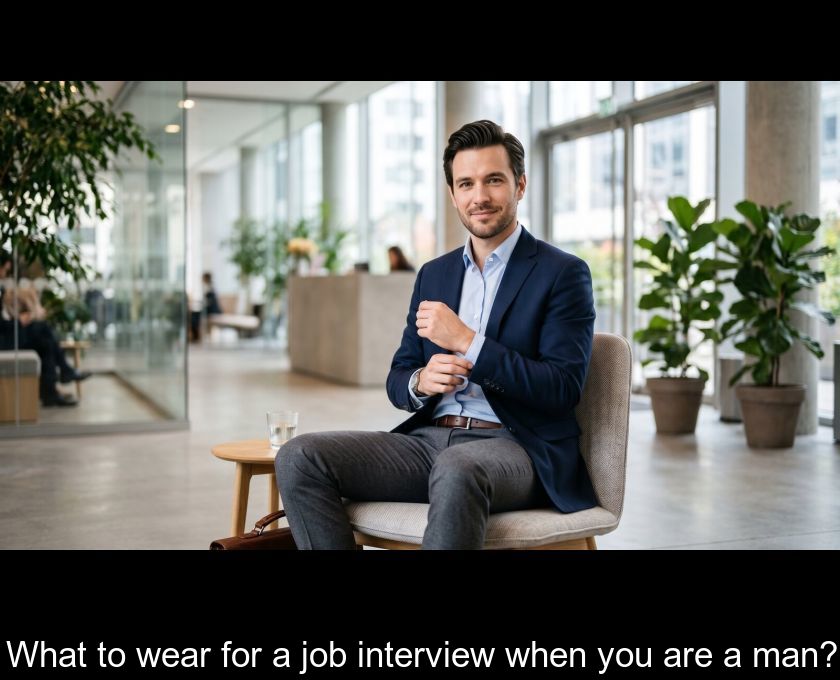
What To Wear For A Job Interview When You Are A Man?
For a job interview, a man should not go wrong with a clean, well-fitted, and understated outfit, chosen a notch above what the company's employees wear: a solid light-colored shirt, dress pants or chinos, polished leather shoes... and a jacket whenever the position or sector allows it. The rest is a matter of details (and common sense). Here’s how to put together the right outfit, from the shirt to the shoes, according to the company you are interviewing with.
The golden rule: dress one notch above the company.
The safest rule is to dress a little more elegantly than the employees of the position you are targeting, without ever overdoing it. If the team works in jeans and sneakers, chinos and a shirt are sufficient; if they wear blazers, come in a suit.
Why a notch above? Because a polished outfit shows that you take the meeting seriously, while an overly casual outfit can come across as indifference. And first impressions are formed very quickly: researchers at Princeton University have shown that just a tenth of a second is enough to form an opinion about someone based on their face. Your outfit contributes to this initial judgment, even before you say hello.
To understand the company's habits, look at team photos on their website or social media. When in doubt, ask the person who scheduled the meeting: no one will hold it against you.
The basics to follow before choosing your clothes.
Before even choosing a shirt or a jacket, a few principles apply to all interview outfits: cleanliness, comfort, and sobriety.
- Impeccable clothing: clean, ironed, stain-free, without lint or missing buttons.
- An outfit already worn: avoid wearing a new shirt or shoes on the big day. Try on the entire outfit the day before, both standing and sitting, to ensure nothing is tight or baggy.
- A sober appearance: no flashy logos, no printed messages, discreet colors. The recruiter should remember you, not your outfit!
- A neat presentation: styled hair, trimmed beard or clean shave, clean nails, and a very light fragrance (or no fragrance at all).
The shirt, the centerpiece of the interview outfit.
In almost every sector, the shirt is the central piece of men's interview attire: it can be worn with a suit, with just a blazer, or with simple chinos, and it's the first thing people notice, right under the face. Therefore, it should be chosen with the utmost care.
Opt for a long-sleeved shirt made of cotton, with a classic or Italian collar, which can be worn both with and without a tie. Cotton has the advantage of being breathable, which is not a luxury when stress raises the temperature... The button-down collar, more casual, is well-suited for companies where no one wears a tie.
To find the right model, it's best to go through a brand that knows its subject. Serge Blanco, a French brand of men's ready-to-wear known for its polos and shirts, offers a wide range of men's shirts in cotton, with sizes going up to 5XL. This is an important point, as a shirt only looks good if it truly fits you.
Choosing the right size and fit for your shirt
A well-fitted shirt can be recognized by three indicators: the collar closes without being tight, the shoulder seam falls on the top of the shoulder, and the cuff reaches the base of the thumb.
For size, rely more on the neck circumference in centimeters (39/40, 41/42...) rather than letter sizes, which vary from brand to brand: according to guides, a neck size of 39/40 corresponds sometimes to an S and sometimes to an M! Measure it at the base of the neck, at the level of the Adam's apple, without tightening the measuring tape.
Once the shirt is on, check the following points:
- The collar: buttoned, it should allow a finger to fit between the fabric and the neck.
- The shoulders: if the seam falls on the top of the arm, the shirt is too big.
- The sleeves: they should neither pull at the elbow nor ride up when you bend your arm. Under a jacket, the cuff should extend about 1 cm beyond the sleeve.
- The chest: the button placket should remain straight, with no pulling buttons or bulging fabric.
- The length: a dress shirt should cover the buttocks to stay tucked in when you sit down.
If a shirt is too big, it looks sloppy; if it's too small, it reminds you of its presence with every movement... And an uncomfortable outfit ultimately muddles your body language, which carries significant weight in the impression you leave.
What color shirt for a job interview?
The safe bets are the white shirt and the light blue shirt, both solid colors. These two colors go well with all suits and ties, and they brighten the face.
Fine stripes and subtle small checks also work very well, especially in less formal companies. On the other hand, avoid bright colors (red, orange, apple green), fancy prints, and the black shirt, which is more suitable for an evening out than for a professional meeting.
For the rest of the outfit, stick to neutral tones: navy blue, charcoal gray, medium gray, or beige for chinos. A simple rule: no more than three colors on you, including shoes.
Suit, jacket or chinos: how to choose the bottom of the outfit.
The suit remains the reference outfit for management positions, customer-facing roles, and traditional sectors. Choose it in a solid color, navy blue or gray, and have it tailored if necessary: the trousers should fall just on the shoe, without any accordion pleats.
In more relaxed companies, a standalone jacket (a navy blazer, for example) worn with gray trousers or chinos gives a polished look without appearing stiff. And when no one is wearing a jacket, well-fitted chinos and a shirt are sufficient. Jeans? They only have a place in companies where everyone wears them, and only if they are dark, raw, and without any rips.
Tie or no tie?
The tie is no longer mandatory in interviews, except in sectors where it is still part of the uniform: banking, insurance, law or consulting firms, luxury hospitality... Elsewhere, a well-fitted shirt, open at one button (not two!), is more than enough.
If you wear one, choose a simple, solid color or small pattern. Once tied, its tip should just touch the belt buckle. And if you're unsure, tuck it into your pocket: you can always tie it before entering, seeing how the reception staff is dressed.
Shoes, belt, and accessories: the details that matter.
Shoes are more noticeable than one might think: clean and polished, they complete the outfit; worn or dirty, they ruin it. With a suit, opt for black or dark brown leather oxfords or derby shoes. With chinos, derby shoes, loafers, or leather boots are also suitable.
- The belt is the same color as the shoes.
- The socks are dark, matching the pants and high enough to avoid showing skin when crossing your legs. Forget white sports socks!
- The watch remains discreet, and if it's a smartwatch, turn off its notifications.
- The bag: a briefcase or document holder rather than a hiking backpack.
Adapting your outfit to the type of company
The appropriate level of elegance primarily depends on the company and the position. Here are the main trends by sector, to be adjusted based on your observations.
Banking, insurance, law firms, or consulting
Dark suit, white or light blue shirt, tie, and leather shoes: here, the classic remains the norm. Even for an internship or first job, it's better not to skip the jacket.
SMEs, commerce, industry, and public service
A jacket or suit without a tie is suitable for most positions. For the oral exam of a public service competition, focus on sobriety: the jury should be interested in your answers, not your outfit.
Start-ups, communication agencies, and creative professions
The codes are more flexible, but flexible does not mean sloppy. A shirt (or a high-quality polo) with chinos or raw jeans, and clean shoes will do the trick. A suit and tie would even seem a bit out of place. This trend is not new: in 2015, nearly two out of three French employees reported not following any specific dress code at work.
Craftsmanship, construction, logistics, and field jobs
No need for a suit for a position as a site manager or maintenance technician. A clean shirt or polo, neat trousers, and well-maintained shoes show that you take the meeting seriously without looking like you're in costume.
Video interview: attire matters too.
A video conference interview requires the same attire as a face-to-face interview, and it's better to dress fully in case you need to stand up.
In front of the camera, opt for a solid light or medium-colored shirt, such as sky blue. Fine stripes and small tight patterns can create a moiré effect: the fabric appears to ripple or shimmer on screen, which distracts your interlocutor. Bright white can also come off too glaring depending on the lighting. For the rest (framing, lighting, connection), follow our tips for succeeding in an online job interview.
Summer or winter: adapting your maintenance outfit to the season
In summer, keep the long sleeves: a short-sleeved shirt quickly feels too casual, especially under a jacket. Instead, choose lightweight cotton and an unlined jacket. Linen is nice in high heat, but it wrinkles very quickly (best reserved for the most relaxed companies).
In winter, the coat is part of the outfit, as it's the first thing the person welcoming you sees: choose it to be understated, navy blue, gray, or camel. In casual companies, a fine V-neck sweater over the shirt works very well as a substitute for the jacket. And remember to remove your hat and scarf before entering the premises.
Clothing mistakes to avoid in an interview
A few missteps are enough to ruin a good application. The most common ones are:
- a wrinkled, stained shirt or one that is poorly tucked into pants
- an outfit that is too formal for the company (a three-piece suit in a start-up)... or too casual for a bank
- ripped jeans, shorts, dirty sneakers, or flip-flops, even in the middle of August
- a perfume so strong that it lingers in the room after you leave
- noisy or flashy accessories: large logos, jingling keychains, ringing phones
Finally, attire is not everything: preparation, punctuality, and attitude matter just as much, as our 5 tips for making a good impression in a job interview remind us.
Note Well
- Italian collar: a shirt collar with very wide points, worn with or without a tie.
- Button-down collar: a collar whose points are secured to the shirt by two small buttons. More casual, it is usually worn without a tie.
- Chino: cotton twill pants, dressier than jeans but less formal than suit trousers.
- No suit and a tight budget? The association La Cravate Solidaire, created in 2012, provides professional attire to job seekers who have an upcoming interview and prepares them with volunteers, image consultants, and recruitment professionals. In 2024, it assisted 14,000 people across France, of whom 65% succeeded in their interviews, according to its own figures.