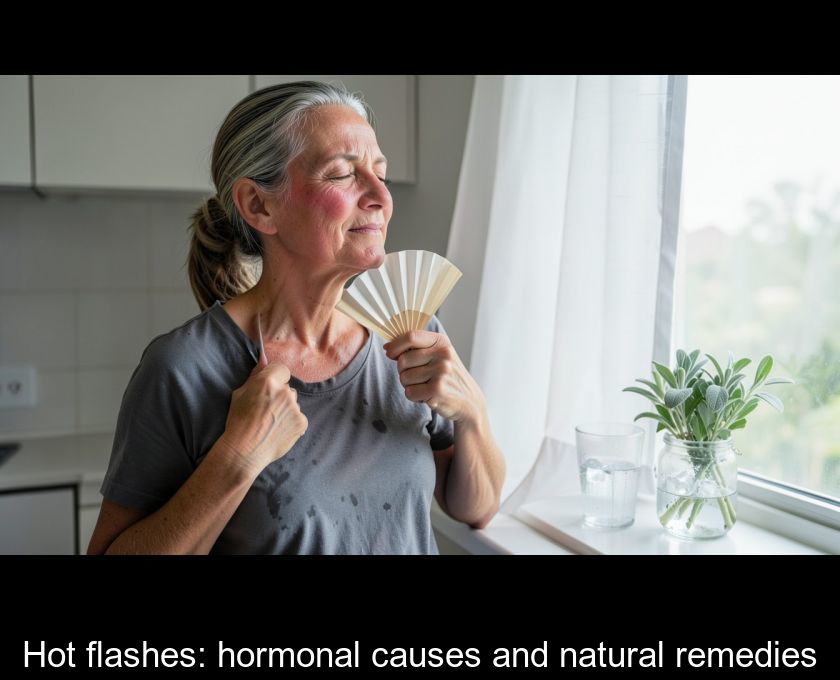
Hot Flashes: Hormonal Causes And Natural Remedies
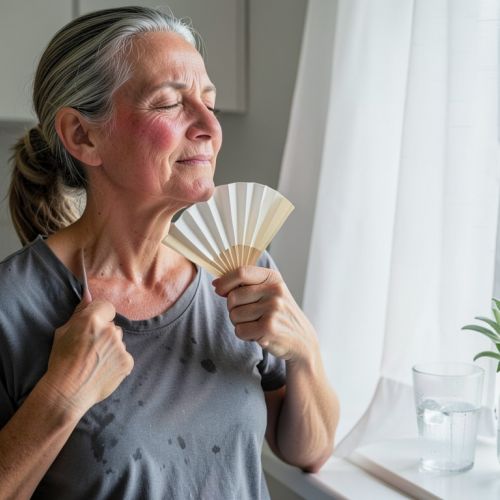
They appear unexpectedly, in broad daylight as well as in the middle of the night, leaving the face scarlet and the t-shirt soaked. Hot flashes affect the vast majority of women at the time of menopause. Here’s what happens in the body, what triggers them, and what helps to cope with them better.
A symptom shared by three out of four women.
If hot flashes catch you off guard for no apparent reason, know that you are not alone: 75% of women experience these hot flashes, making it a very common symptom of menopause.
They mainly occur during perimenopause and in the early stages of menopause, which is when estrogen levels (female hormones) are low. So it's no coincidence that hot flashes occur at the same time as this significant hormonal change.
The good news: generally, they gradually fade away, although for some women, the phenomenon persists and lasts much longer than expected.
How to recognize a hot flash?
It all starts with a wave of heat that originates in the chest and rises to the face before spreading to the arms and legs. The episode is brief (about one to three minutes), but the heart races during this time, and one can experience genuine palpitations.
The skin reddens, and sweating becomes excessive, then the sensation reverses, and cold takes over with its share of chills. During sleep, this same phenomenon manifests as night sweats.
Note: There is no way to predict the onset of a hot flash, which can occur both during the day and at night.
A very real discomfort, both day and night.
During the day, the discomfort is primarily social because one feels like turning beet red in front of everyone. It also happens that the t-shirt gets soaked under the armpits, which is not very pleasant when at work or with friends.
At night, the problem takes on a different face: hot flashes disrupt sleep and fatigue quickly sets in.
Even though each hot flash lasts only a few minutes, their repetition eventually takes a toll on daily well-being. This is why it's important to understand their origin in order to manage them better.
When the brain's thermostat goes haywire.
To understand where these hot flashes come from, we need to take a detour through the brain. A region called the hypothalamus plays a dual role: it regulates the body's temperature and also controls the activity of the ovaries.
When estrogen levels drop, the hypothalamus overreacts and stimulates the production of two hormones, FSH and LH. This agitation disrupts the system that keeps the body's internal temperature stable.
The body then tends to overheat and seeks to release this excess heat. Therefore, a hot flash is nothing more than the cooling mechanism that kicks in to lower the temperature.
Why do they linger with some?
The decrease in estrogen has another consequence: blood circulates less effectively in the vessels. However, blood vessels, which dilate and contract, also participate in regulating the body's temperature.
Often, hot flashes subside one to two years after menopause. If hot flashes continue beyond that, it is because FSH continues to overreact.
There is no typical duration: some women are only bothered for a short time, while others are affected for much longer.
Triggers to watch closely
Some habits clearly trigger crises, and it is best to avoid them as much as possible to limit their frequency. Here are the main triggers to watch out for:
- coffee
- alcohol
- tobacco
- excess sugar
- chili peppers
- stress
Strong emotions deserve special attention, as stress, anger, or anxiety play a major role in the onset of hot flashes. Learning to calm them is therefore just as important as monitoring what’s on your plate.
Finally, avoid overly hot places like saunas, steam rooms, or sunbathing as long as the hot flashes are bothering you.
Move, drink, and eat well.
Engaging in physical activity helps the body better regulate its internal temperature. Sports are also a great way to unwind, which is important considering that stress triggers hot flashes.
Also, remember to drink enough water by spreading your glasses throughout the day: staying hydrated also helps the body better regulate its temperature.
On the plate side, a balanced diet remains fundamental. Several women have noticed that their hot flashes decreased after reducing sugar or eliminating alcohol, and one of them even adopted a low glycemic index diet to achieve this.
The right reflexes during a crisis.
When the heat starts to rise, the first instinct is to stop and stay calm. Telling yourself that the hot flash will pass quickly helps avoid panic, and panic would only make things worse.
Next, it's about lowering the body's temperature with the means at your disposal:
- drink a glass of water
- cool off with a misting spray
- fan yourself
- place a cool object on the back of your neck or forehead
- open the window
- take off your sweater
A woman even shares that she invested in a fan: a small accessory that may not seem like much, but is very helpful when a hot flash strikes in front of everyone.
Breathe to calm the heart.
During a hot flash, the heart races and breathing becomes a valuable tool to calm it down. A simple trick is to inhale through the mouth and then exhale through the nose, which provides a pleasant feeling of freshness.
To regain their calm, some women also practice heart coherence, a method based on breathing exercises that helps them relax.
A woman who experiences her hot flashes mainly at night (and without even sweating) has found her solution: she lies on her back, pushes her duvet away a bit, and follows up with a breathing exercise to relax.
Clothes and a cool room.
The choice of clothing matters a lot: opt for linen and cotton, and wear several layers so you can remove one as the heat rises. Always have a fan and a handkerchief with you.
At night, the room should remain cool: remember to lower the temperature. For bedding, prefer lightweight sheets that allow air to pass through, as well as a thin summer duvet tucked into a linen cover.
A more unexpected tip comes from a woman prone to night sweats: placing something cold on her perineum during the night helped her reduce them.
Phytohormones, natural allies
Among the useful supplements for hot flashes, phytohormones hold a significant place. They can be found in several plants and certain foods:
- on the plant side: black cohosh, sage, hops, red clover, maca, dong quai, yam
- on the plate side: tofu, soy, fenugreek, alfalfa seeds, flaxseeds
Sage often appears in testimonials. One woman drinks it as a leaf tea in the evening, following a six-week course with a month off, and believes it has worked well to reduce her hot flashes.
Another takes sage in capsule form and claims she no longer experiences them, while a third is starting to test a supplement that combines black cohosh and pollen, which she finds quite effective.
Against stress and as a support
Since stress triggers crises, some soothing plants like passionflower, hawthorn, and valerian have their place. Magnesium, as well as saffron and rhodiola, which help regulate emotions, can be added.
Other supplements are mentioned for hot flashes: evening primrose oil, vitamin B6, pollen, omega-3s, royal jelly, goji root, beta-alanine (an amino acid), or raspberry bud, which is considered a regulator of female hormones.
At the moment of a hot flash, it is also possible to apply a drop of fine lavender or peppermint essential oil on the temples. Before starting any treatment, consult your doctor or pharmacist: natural does not mean without precautions.
To each their own solution.
Women experiencing these hot flashes willingly share what relieves them, and the variety of responses is striking. One acupuncture enthusiast, attending a session once a month, claims to have no more issues, while others turn to Bach flowers or chaste tree to regain hormonal balance.
The combinations vary greatly from one woman to another: pollen, magnesium, and omega-3 for one, royal jelly, vitamin D, magnesium, and zinc for another, or borage and evening primrose in capsules with vitamin D and coconut water. Another woman combines a sage infusion with a homeopathic remedy.
Notably, one woman acknowledges that only a product that is not natural has managed to relieve her. What works for one may not necessarily suit her neighbor, and it sometimes takes several attempts to find the right formula.
When should you consult?
Before attributing everything to menopause, make sure that these hot flashes are not related to a thyroid problem. A woman who experienced many of them discovered that she was suffering from a thyroid disease (known as Hashimoto's) that produces the same symptoms as menopause.
Keeping a tracking journal is also an excellent idea: note the duration of each episode and their regularity to gain clarity over the weeks.
If the hot flashes become too debilitating, talk to your doctor while bringing your notebook. This way, they will have concrete information to offer you support tailored to your situation.
What to remember
Hot flashes result from a disruption in the body's temperature, caused by a decrease in estrogen and the reaction of the hypothalamus. They often eventually subside, but you are not obliged to endure them without taking action while waiting for them to pass.
Start by avoiding what triggers hot flashes (tobacco, alcohol, coffee, spicy foods, excess sugar, and stress), then dress in layers and keep a fan handy. Move around, drink regularly, and learn a breathing exercise to stay calm when the heat rises.
Finally, if hot flashes persist or disrupt your days as well as your nights, do not hesitate to consult: your doctor can check to ensure that the thyroid is not involved.