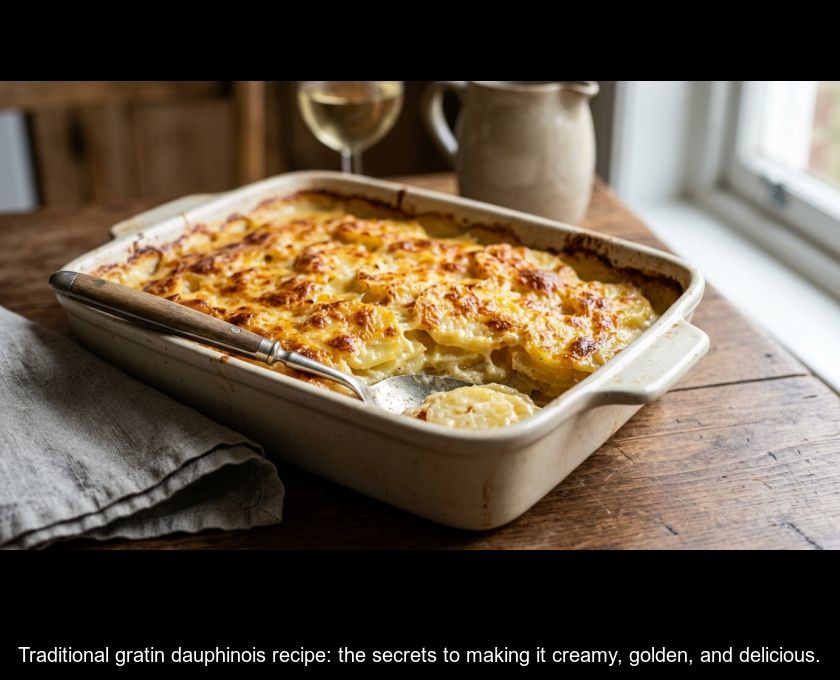
Traditional Gratin Dauphinois Recipe: The Secrets To Making It Creamy, Golden, And Delicious.
A classic of family cooking, gratin dauphinois is one of those simple dishes that everyone agrees on. With its tender potato slices, gentle cooking, and beautifully golden surface, it pairs well with both roasted meat and a somewhat improvised Sunday meal. Despite its apparent simplicity, this specialty requires a few good practices. The choice of potatoes, the thickness of the slices, the right balance between milk and cream, the cooking... everything matters. We invite you to discover a traditional version and some very simple tips for preparing a creamy, indulgent, and well-balanced gratin.
Why traditional gratin dauphinois remains a staple of family meals
Gratin dauphinois originated in the former province of Dauphiné and has been mentioned in writing since 1788. One could say it’s not a recent creation... Its enduring popularity is due to a very simple idea: transforming everyday ingredients into a generous and comforting dish. All you need are potatoes, garlic, milk, cream, a bit of butter, and seasoning to create a side dish that smells like home cooking.
This success remains unchallenged. In France, potatoes are still a staple food; the CNIPT (National Interprofessional Committee for Potatoes) reminds us that 98% of households consume them, 62% of French people cook them at least once a week, and consumption reaches 52 kg per person per year. This also explains why gratin dauphinois holds a special place in our kitchens, as it evokes tradition, economical cooking, and the joy of sharing.
The right ingredients for a successful gratin dauphinois.
Before even talking about cooking, you need to choose the right products. To compare proportions or find another recipe for gratin dauphinois, you can also look at a traditional version in parallel. In any case, the base remains the same: potatoes, milk, cream, garlic, butter, salt, pepper, and a bit of nutmeg if you like that subtle aroma.
The most important thing is the choice of potatoes. For this type of gratin, it's better to favor firm or melting varieties that can hold up during cooking without turning to mush. Charlotte, Monalisa, Amandine, or Roseval are often mentioned for this kind of preparation. The idea is to achieve tender slices that are still distinct when served.
Here are the ingredients needed to prepare a gratin dauphinois for 6 people:
- 1.2 to 1.5 kg of potatoes
- 50 cl of milk
- 25 to 30 cl of whole or light liquid cream
- 2 cloves of garlic
- 20 to 30 g of butter for the dish
- salt and pepper
- a bit of grated nutmeg, optional
Note: In the traditional version, there are neither eggs nor grated cheese. This is an important point because many everyday recipes add Emmental by reflex. The result can be good, of course, but it is no longer quite the classic gratin dauphinois.
The recipe for traditional gratin dauphinois step by step.
The preparation of this gratin is easy, but it requires a bit of patience. The secret is mainly not to rush through the steps.
1) Preheat your oven to 150°C or 160°C depending on its power. Generously butter a gratin dish, then rub it with a clove of garlic cut in half.
2) Peel the potatoes, wash them quickly, then dry them. Cut them into thin slices, ideally 2 to 4 mm thick. The more uniform the slices, the more even the cooking will be.
3) Arrange the potato slices in the dish in successive layers. Season with salt, pepper, and add a little nutmeg between the layers if you like. You can also sprinkle the second clove of finely chopped garlic between the rows of potatoes.
4) Mix the milk and cream in a bowl, then pour this mixture over the potatoes. The liquid should almost reach the last layer without completely drowning the dish.
5) Bake and let cook for about 1 hour 15 minutes to 1 hour 30 minutes. If your oven browns quickly, cover the dish during cooking and remove this cover at the end to brown the top.
6) Check the cooking with the tip of a knife. The potatoes should be very tender. Then let the gratin rest for 5 to 10 minutes before serving; this is often when it finishes setting.
There is another method, highly appreciated, which involves pre-cooking the potato slices for a few minutes in the milk-cream mixture before baking. This technique allows for an even creamier result and limits unpleasant surprises.
The secrets of a creamy, golden-brown gratin.
The first secret is the thickness of the slices. Slices that are too thick remain firm in the center, even after long cooking. Slices that are too thin, on the other hand, risk breaking and losing their structure. A consistent cut really changes the final result.
The second secret is the natural starch in the potato. Therefore, avoid soaking the slices in water or rinsing them multiple times after cutting. This starch helps the milk-cream mixture to naturally bind the preparation. There’s no need to add cornstarch; the gratin stands on its own when done properly.
The third point is slow cooking. An oven that is too hot can brown the surface very quickly while the potatoes remain a bit firm underneath. Gentle cooking allows the liquid to gradually penetrate the layers. The top becomes crispy, the center becomes tender, and everything holds together better when served.
Finally, don’t forget to let it rest after cooking. It may seem trivial, but this little waiting time changes a lot. The gratin is less liquid, the flavors settle, and serving is cleaner.
Mistakes to avoid to not ruin your gratin dauphinois.
The first mistake is choosing a dish that is too large. If the potatoes are spread in a layer that is too thin, they risk drying out. It's better to use a dish that is sufficiently filled, where the slices remain tightly packed.
The second classic mistake is neglecting seasoning. Potatoes absorb a lot of flavor. Therefore, you should salt and pepper regularly between the layers, without excess of course, but also without hesitation.
The third mistake is wanting to rush. A gratin dauphinois does not like haste. If you suddenly increase the temperature to save time, you risk having a top that is too browned and an interior that is still a bit firm. It's frustrating, especially when the kitchen is already filled with aroma.
Another trap is adding grated cheese out of habit. It forms a quick crust and alters the texture of the gratin. Again, this is not necessarily bad, but it is no longer the traditional recipe.
Note: If your gratin releases too much liquid, it may be due to an unsuitable variety of potatoes, a dish that is too filled with milk, or insufficient resting time. There's no need to panic; a slightly longer time in the oven can sometimes be enough to correct this.
Can you prepare gratin dauphinois in advance?
Yes, and it's actually a very good idea when you're hosting. You can prepare the gratin a few hours in advance, or even cook it almost completely and then gently reheat it before the meal. It holds up very well to this arrangement, as long as you don't dry it out during reheating.
The best method is to cover it lightly, then put it back in the oven at a moderate temperature. You can also add a small splash of cream or milk on top if it seems a bit dry. However, avoid reheating it too aggressively, as that hardens the edges before warming the center.
Served with roasted meat, poultry, a veal roast, or even a simple green salad, this dish always makes an impression. This is precisely what we love about this recipe; it remains simple but immediately gives an impression of generous and careful cooking.
Nota Bene: dauphinois gratin is sometimes confused with other potato gratins that are richer in cheese. The distinction is important. Savoyard gratin, for example, is specifically characterized by the presence of cheese. Here, the indulgence comes from elsewhere: cream, milk, garlic, well-chosen potatoes, and patient cooking.
All that's left for you to do is sit down at the table. With this iconic dish, you have a family recipe that is economical and truly indulgent, the kind of classic that you happily make again as soon as the temperatures drop... or simply when the desire to eat well arises.