Highway Rest Areas: All The Tips To Pay Less
A coffee for over 3 euros, a bottle of water costing the same as a sandwich in the city, a full tank that rises unexpectedly... Stopping at a rest area can sometimes be a shock for vacationers. However, taking a break to catch your breath is essential on a long journey (and even highly recommended for safety). The good news is that there are plenty of tips to take this break without breaking the bank. Here are our best tips for eating, drinking, and refueling smartly.
Why does everything cost more on a highway rest area?
We've all made that little grimace when it's time to pay at a highway shop... and it's not just an impression. At a rest area, prices are indeed significantly higher than elsewhere.
For example, expect to pay around 3 euros for a 1.5-liter bottle of water, compared to 60 cents in a supermarket, or 6 euros for a triangle sandwich that costs less than 3 elsewhere.
Overall, the average basket often amounts to twice the price of a hypermarket. When it comes to fuel, the difference is just as striking, with the liter costing on average 15 to 25 cents more than in the city, resulting in an additional cost of 7.50 to 12.50 euros for a full tank of 50 liters.
How can such a difference be explained? Several reasons come into play:
- The brands located at the rest areas pay high fees to the operators for occupying the space,
- they must remain open 24 hours a day, 7 days a week, with staff on hand at all times,
- supplies often come from farther away depots, which increases logistics costs,
- and competition is almost non-existent on the same stretch, with the hurried driver taking whatever they find.
In short, a somewhat captive clientele and significant expenses... the perfect recipe for high prices. The question remains how to avoid it.
Eat and drink smart without depriving yourself.
First tip, and probably the quickest, take advantage of the low-priced offers now available at certain rest areas. For example, you will find good deals at highway rest areas with options designed for tight budgets. On the Sanef network, eleven "Good Deal" rest areas offer a lunch formula for 5.50 euros (sandwich, drink, and dessert), a coffee for 1.10 euros, and a 1.5-liter bottle of water for 1 euro. Enough to eat without feeling guilty, and without straying far from the highway. These offers are generally indicated by signs placed about 1,500 meters before the rest area, so keep an eye out.
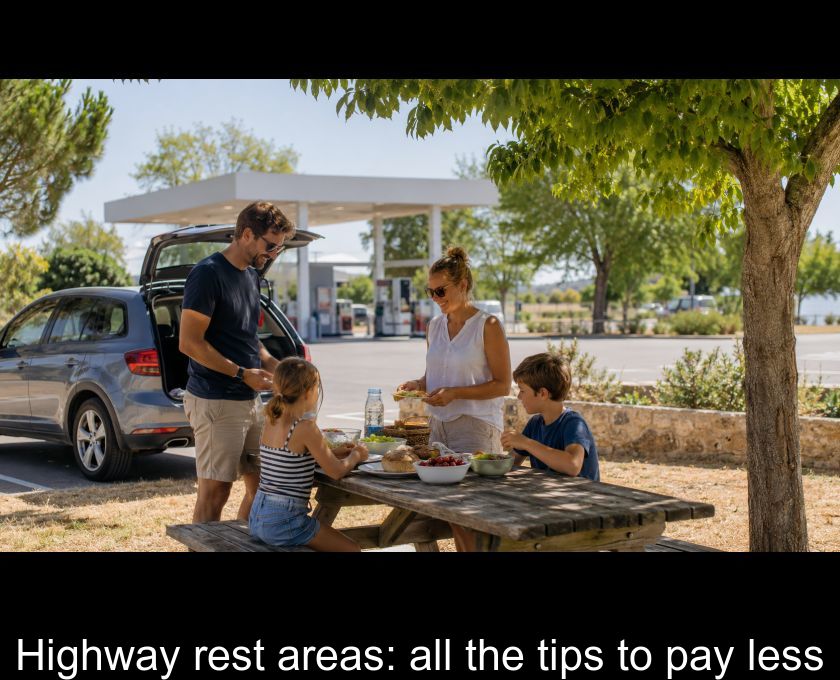
Second reflex, the eternal picnic. This is by far the most economical solution... and often the most friendly. Prepare a cooler before you leave (homemade sandwiches, fruits, cold drinks) and stop at a rest area rather than a large service area. These simpler rest areas are equipped with tables, benches, and shaded spaces, without a shop to tempt you. You can find one approximately every 10 to 15 kilometers, more than enough to fit in a lunch break.
Note: Eating light remains the best idea while driving. A heavy meal promotes drowsiness (the famous post-lunch slump), which is particularly dangerous on the highway. A salad, a fruit, a bit of water, and a coffee... and you'll be refreshed and ready to go.
Fill up without paying the high price.
Fuel is often where the biggest savings can be made. The first instinct? Compare prices before hitting the road. The official site prix-carburants.gouv.fr lists the prices of nearly 10,000 stations, updated daily, and you can also compare fuel prices on our site to find the cheapest station along your route.
A few simple habits can help reduce costs:
- Fill up before getting on the highway, ideally at a hypermarket, where the price per liter is often 15 to 25 cents cheaper.
- If the gauge allows, take an exit to reach a nearby large supermarket station; the detour of a few minutes quickly pays off.
- Slow down; driving at 120 km/h instead of 130 reduces consumption by about 1 liter per 100 kilometers, saving several euros on a long trip.
- Consider eco-driving (gentle acceleration, anticipating braking), which can lower consumption by 10 to 15% according to ADEME.
Note: Air conditioning increases consumption by 1 to 2 liters per 100 kilometers in urban conditions. On the holiday road during a heatwave, it's hard to do without... but remember to turn it off on longer stretches to save a bit, both for the engine and your wallet.
And on the road, also lighten the toll fee.
We sometimes forget, but tolls weigh heavily on the budget of a trip (sometimes as much as fuel). Again, there are a few solutions. If you regularly use the same route, a toll badge can entitle you to a discount of up to 30% on repeated trips, typically a home-work commute done about twenty times a month.
Another little-known tip is that you can top up your toll account with vacation vouchers ANCV. It’s impossible to pay the toll directly with these vouchers, but by using the badge, you can use them without difficulty. Very handy during departures.
Finally, carpooling remains unbeatable. Sharing the trip (and thus the toll and fuel) with one or two passengers mechanically divides the cost. Good for the wallet, good for the planet.
The recipe for a successful and economical break.
In the end, paying less at highway rest areas comes down to a few simple actions: planning your fuel stops, spotting low-cost options, bringing a cooler when possible, and taking advantage of good deals where they exist. A well-prepared break ensures you arrive relaxed, safe... and without emptying your wallet along the way. Safe travels, and happy savings!
Note Well
Service area or rest area? The service area offers fuel, a shop, dining options, and restrooms. The rest area, simpler and more common, mainly provides picnic tables, toilets, and green spaces, without any commercial services. To save money, it is often the best option.
Electronic toll collection and free flow: electronic toll collection is a small badge that opens automatically at the barrier, without stopping or searching for change. On "free flow" highways (without barriers), it becomes almost essential for automatic billing and to avoid fees in case of missed payment.